
A Just and True Return
In 1780, the Pennsylvania General Assembly declared that all enslaved persons should be registered. In 1788, it declared that their children should also be registered. Together, these returns constitute a vast northern slavery archive and a promising resource for African-American genealogical research.
Original documents or reliable transcriptions exist for fifteen counties, and several other counties’ returns can be at least partially reconstructed. These materials should exist in a single, accessible place. I envision A Just and True Return as a searchable database centered on these registrations that, where possible, traces families through last wills and testaments, newspaper advertisements, court cases, and census records. In the meantime, I have produced a dataset aggregating biographical information from more than six-thousand surviving county slave registries.
Below are several examples of these slaves returns and related materials. Click on any image to learn more.
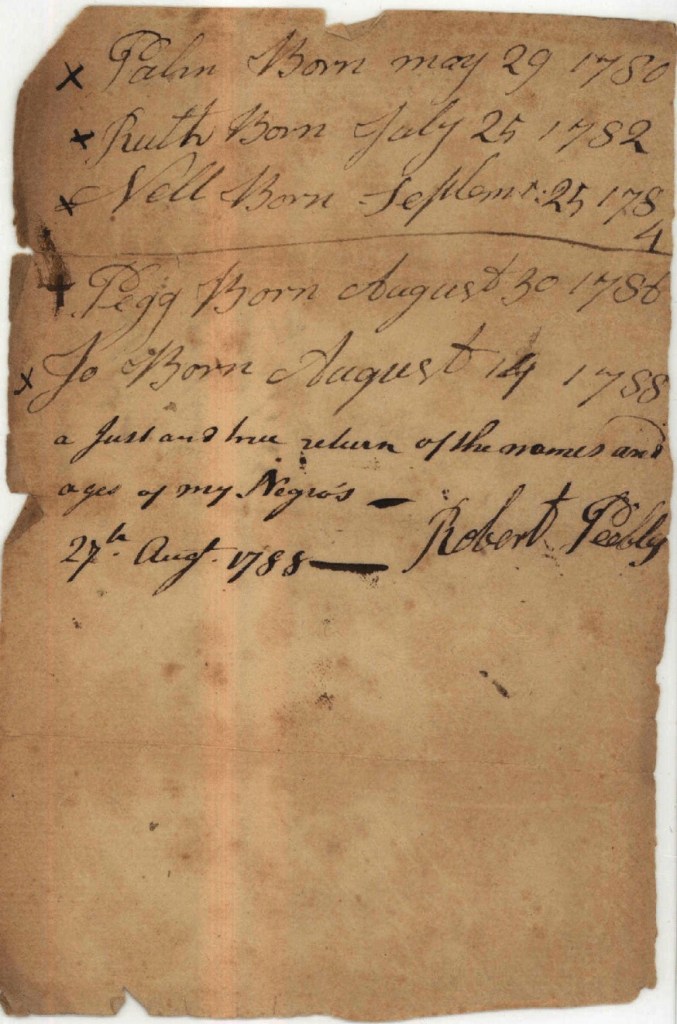
A Just and True Return is intended to serve as a kind of reparative justice. The information contained within these documents—these slave returns—must be returned to the descendants of those whom they purport to describe.

For example, the Cumberland County prothonotary identified Joe as male in his registry, whereas Peebles’ original return did not specify the child’s gender. An 1823 state supreme court case, Stiles v. Nelly, determined that registrations such as this—where the registry clarified the return—were valid.

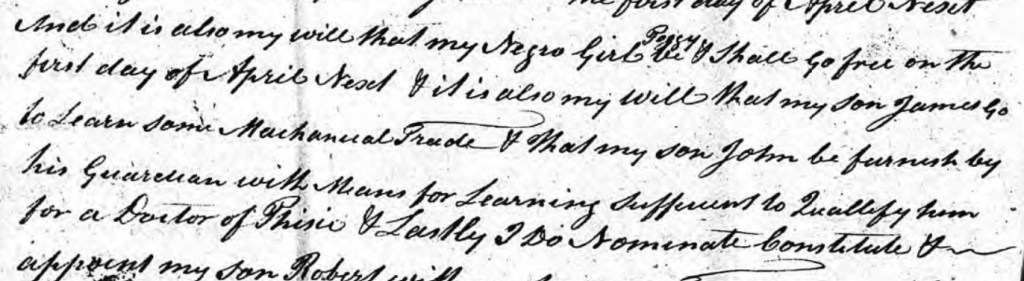
Peggy was twenty-two years old in 1808. It is unclear what happened to the others, people who were likely her mother and siblings.

Here we can see that a child named Jane was born on 20 June 1783. Her mother was a woman named Ruth. Ruth had been enslaved before the 1780 gradual abolition law took effect, but secured her freedom after David Breading failed to register her. It appears that Ruth did not learn of her freedom, however, before giving birth to her daughter. As a result, Jane would experience term slavery.

In this remarkable return, Breading identifies three generations of women: Maria, the daughter; Lydia, the mother; and Jude, the grandmother, registered by George Ewing in Lancaster County.
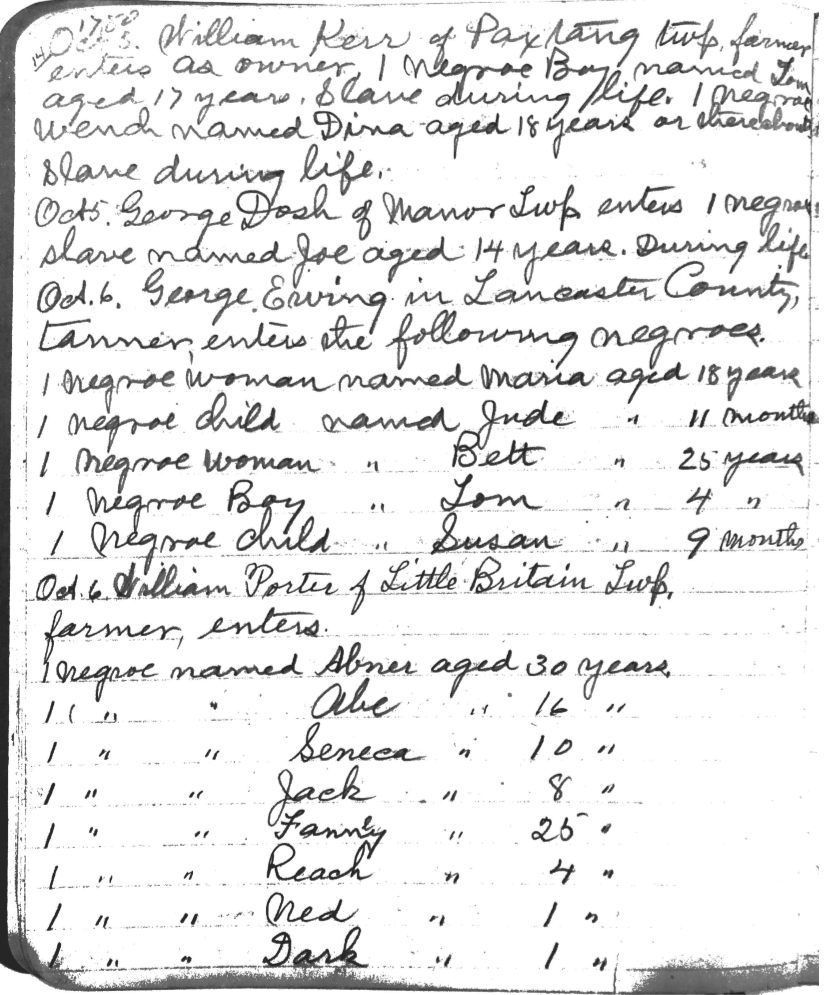
If Maria was Jude’s mother, then the Maria whom Nathaniel Breading registered was her great-granddaughter. Four generations of women captured by two slave returns, spanning fifty-six years of Pennsylvania history.
The primary goal of A Just and True Return is to identify families. To relate Peg and Pegg. To weave together Maria, Jude, Lydia, and Maria across decades and counties. To return them to one another.
Here is a tentative, sample landing page for George Cooper, a man who in 1802 fled bondage in Carlisle and successfully sued for his freedom in Philadelphia.
 Cory James Young's Website